

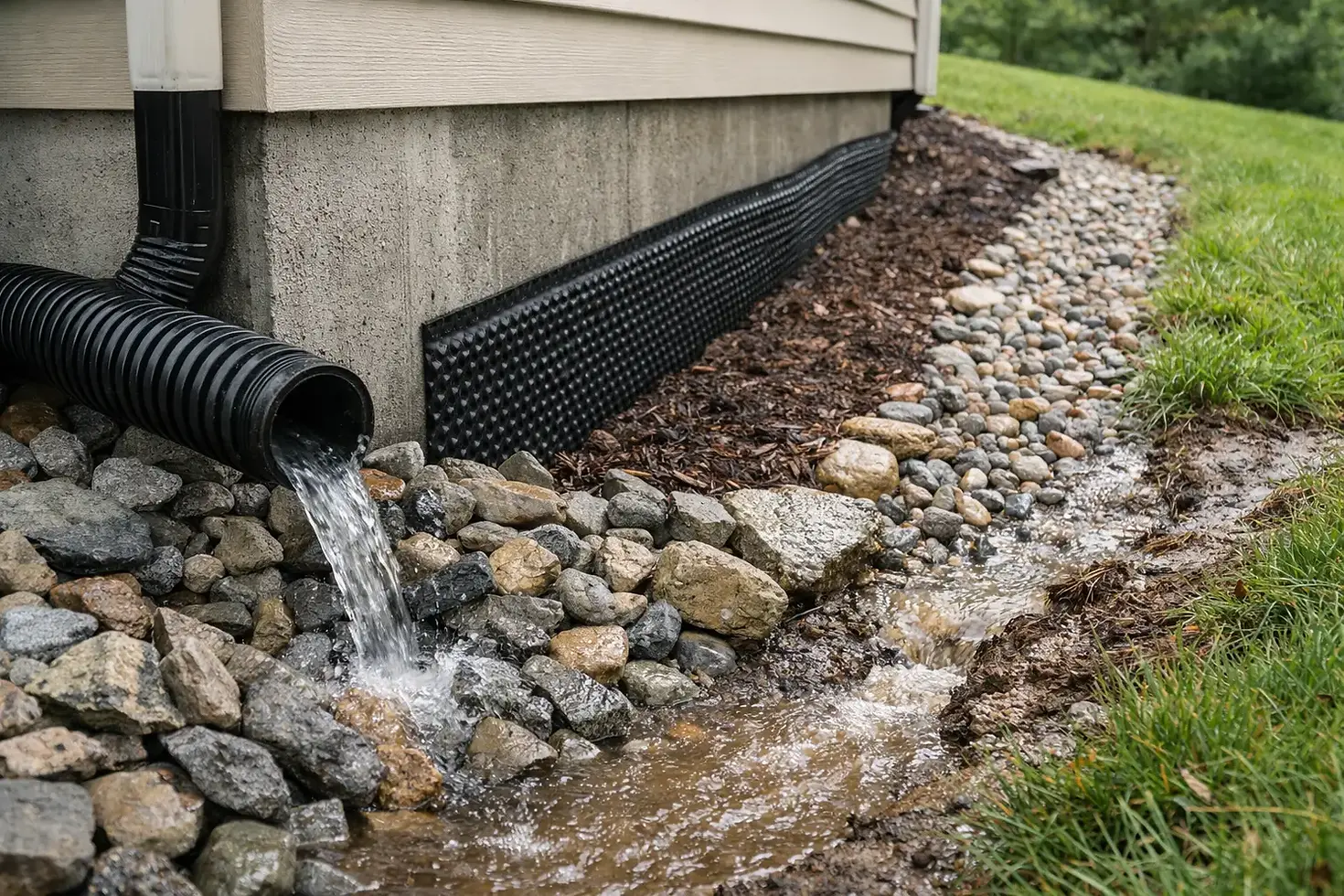
How to Protect Foundations From Runoff Water
A heavy Virginia downpour can send hundreds of gallons of water off a roof in a single storm. When that water spills beside the house or pools near the basement wall, it does more than leave a muddy flower bed. Learning how to protect foundations from runoff helps prevent settling, cracks, basement moisture, mold, and drainage repairs that can quickly become expensive.
Your gutter system, yard slope, downspouts, and underground drainage all work together. If one part fails, water can collect where it does the most damage: directly against your foundation. The goal is simple - capture roof water, move it away from the home, and keep it moving even during Virginia’s wet seasons.
Why runoff near a foundation is a serious problem
Soil around a home naturally absorbs rainwater, but it can only handle so much at once. When runoff repeatedly saturates the ground next to the foundation, the soil expands, softens, and places uneven pressure on basement walls and footings. During dry periods, that same soil can shrink. Over time, this wet-dry cycle can contribute to shifting, cracks, and water entry points.
Runoff also finds small weaknesses. Water can seep through hairline cracks, deteriorated sealant, utility openings, window wells, or the joint where the foundation wall meets the floor. In Virginia, humidity, seasonal storms, falling leaves, winter freezes, and spring thaws create plenty of opportunities for those small problems to grow.
The warning signs are often visible before major damage occurs. Watch for standing water after rain, soil washed away from beds, mulch piled against siding, damp basement walls, white mineral staining on masonry, or gutters overflowing at the corners. A musty smell indoors can also point to ongoing moisture below grade.
How to protect foundations from runoff at the roofline
The roof is where most runoff begins, so gutter performance matters far more than appearance. Gutters should collect water along the entire roof edge and direct it into properly sized downspouts. If debris, sagging sections, loose fasteners, or poor pitch interrupt that flow, water can spill over the side and land right beside the foundation.
Keep gutters clean enough for water to move freely. In neighborhoods with mature oaks, pines, maples, or other heavy tree cover, a single fall cleaning is often not enough. Leaves can build up quickly, while pine needles and roof grit can create dense clogs that are harder to spot from the ground. Spring pollen, seed pods, and storm debris also deserve attention.
Look for overflow during or immediately after a moderate rain. Water sheeting over the gutter edge usually means there is a blockage, a pitch issue, an undersized system, or water is overshooting because of roof design. Water coming from a gutter seam or end cap points to a repair need. These are not cosmetic issues when the leak is dumping water against the house.
Gutter guards can reduce the amount of debris entering the system and make routine maintenance more manageable. They are especially useful where trees consistently shed leaves or needles. Still, guards are not a substitute for inspection. Debris can collect on top, outlets can clog, and gutters need periodic cleaning to confirm water is reaching the downspouts.
Send downspout water far enough away
A downspout that ends at the foundation is one of the most common drainage problems around a home. As a general rule, roof water should discharge at least 4 to 6 feet away from the foundation, with a path that continues downhill and away from the structure. In some yards, particularly those with clay-heavy soil or poor drainage, water may need to travel farther.
Above-ground extensions are a practical option when there is open space and the discharge point will not create a trip hazard or send water toward a neighbor’s property. Use a secure, solid extension rather than a loose piece that can wash out of place during a storm. Make sure it does not empty onto a walkway, driveway, or low spot where water can return toward the home.
For a cleaner, more permanent solution, underground downspout drainage can carry water beneath the landscape to a suitable outlet. This approach can protect landscaping, remove visible extensions, and direct water to a lower portion of the property. The outlet location matters. A buried pipe that ends in a flat, saturated area will not solve the problem, and a blocked underground line can force water back toward the house.
If your underground drainage already exists, have it checked when downspouts back up, surface drains stay full, or water appears near the foundation despite clean gutters. Roots, sediment, crushed pipe, and disconnected sections can all restrict flow.
Correct the grade around your home
Even a perfectly maintained gutter system cannot overcome a yard that slopes toward the house. The ground should gradually fall away from the foundation so surface water naturally moves outward. A common target is a drop of about 6 inches over the first 10 feet, although lot layout, hardscaping, soil conditions, and local drainage patterns can affect the right solution.
Walk around your home after a rain. Notice where puddles form and where water travels. Low spots next to the foundation, sunken mulch beds, settled soil near utility lines, and patios that pitch toward the house all deserve attention. Regrading with clean fill soil can help, but do not pile soil so high that it covers siding, brick weep holes, or the clearance between exterior materials and the ground.
Landscaping should support drainage, not trap it. Mulch is useful for plant beds, but thick layers can hold moisture against the wall and hide drainage issues. Keep planting beds below siding and avoid building raised borders that act like a dam around the foundation. Deep-rooted plants may help stabilize soil in some areas, but large trees planted too close to the house can create root and moisture concerns of their own.
Address water that your gutters cannot control
Some runoff comes from higher ground, neighboring lots, long driveways, or roof valleys that discharge a concentrated stream. If water moves across the yard toward your home, you may need a drainage solution beyond gutter extensions.
A shallow swale can guide surface water around the house and toward a safe drainage area. A French drain may help where groundwater or recurring saturated soil is the issue. Channel drains can be effective along driveways, patios, and garage entries. The right choice depends on where the water starts, how much water is involved, soil type, and whether the property has a reliable outlet.
This is where guessing can be costly. Adding a drain without a proper slope or discharge plan can simply move the water problem to another location. For persistent flooding, foundation moisture, or a yard that remains soft for days after rain, a drainage assessment is the safest next step.
Maintain protection through Virginia’s seasons
Foundation runoff protection is not a one-time project. It needs attention before the seasons that challenge your home most. Before spring storms, clear winter debris and check that downspouts are attached. During summer, inspect after intense thunderstorms, especially if water has washed mulch or soil out of beds. In fall, remove leaves before they compact in gutters and downspouts.
Winter deserves its own check. Freeze-thaw cycles can loosen gutter connections, crack extensions, and turn minor drainage issues into ice hazards. Keep discharge areas open so melting snow and winter rain have somewhere to go. If water is repeatedly freezing at the base of a downspout, the outlet or grade may need adjustment.
For busy homeowners, recurring gutter maintenance is often the simplest way to catch problems before they affect the foundation. Virginia Gutters can clean, repair, inspect, and help improve the drainage path from your roofline to a safer discharge point.
A dry foundation starts with paying attention to where water goes during the next rain. If it is pooling, overflowing, or turning back toward your house, acting now can protect your home long before the damage reaches the basement.



Comments