


Gutter Guard Systems Review for Virginia Homes
A gutter guard can look like a small upgrade until the first hard Virginia storm sends water over a clogged gutter and toward your foundation. This gutter guard systems review is built for homeowners who want less ladder work, fewer clogs, and dependable drainage through falling leaves, pine needles, heavy rain, snow, and freeze-thaw weather.
The right guard can reduce the debris that enters your gutters and make maintenance safer and less frequent. The wrong guard can trap material on top, restrict water flow, or complicate future repairs. That is why the best choice is not simply the most expensive product or the one with the boldest warranty. It is the system that fits your roof, gutter condition, surrounding trees, and drainage needs.
What a Gutter Guard Should Actually Do
Gutter guards are designed to keep large debris out while allowing rainwater to enter the gutter. They do not make a gutter system maintenance-free. Pollen, roof grit, small seeds, and decomposing organic material can still collect over time, especially where trees overhang the roof.
A quality system should shed leaves instead of collecting them, handle a fast downpour without sending water over the edge, and stay securely attached through wind and winter weather. Just as important, it should not damage shingles, obstruct the gutter trough, or hide a problem such as poor slope, loose fasteners, or an undersized downspout.
For Virginia homes, performance in real weather matters more than a showroom demonstration. A guard that handles dry leaves may behave differently under a wet blanket of oak leaves after a Richmond-area storm. Pine needles around Glen Allen, Mechanicsville, and wooded Chesterfield neighborhoods are another common test. Fine debris requires a different level of filtration than broad leaves.
Gutter Guard Systems Review: The Main Types
Each guard style has legitimate strengths. The trade-off is that no single design is the right answer for every roofline.
Perforated Aluminum or Steel Screens
Screen guards use holes or slots to admit water while blocking larger leaves and twigs. They are a practical middle-ground option for homes with moderate leaf debris. Durable metal screens can perform well when they are properly secured and fitted tightly to the gutter.
Their limitation is the size of the openings. Larger perforations may let pine needles, seed pods, and shingle grit into the system. Smaller holes filter more debris but can become covered with pollen or fine material. Screen guards still need seasonal cleaning, particularly after spring pollen and autumn leaf drop.
Micro-Mesh Guards
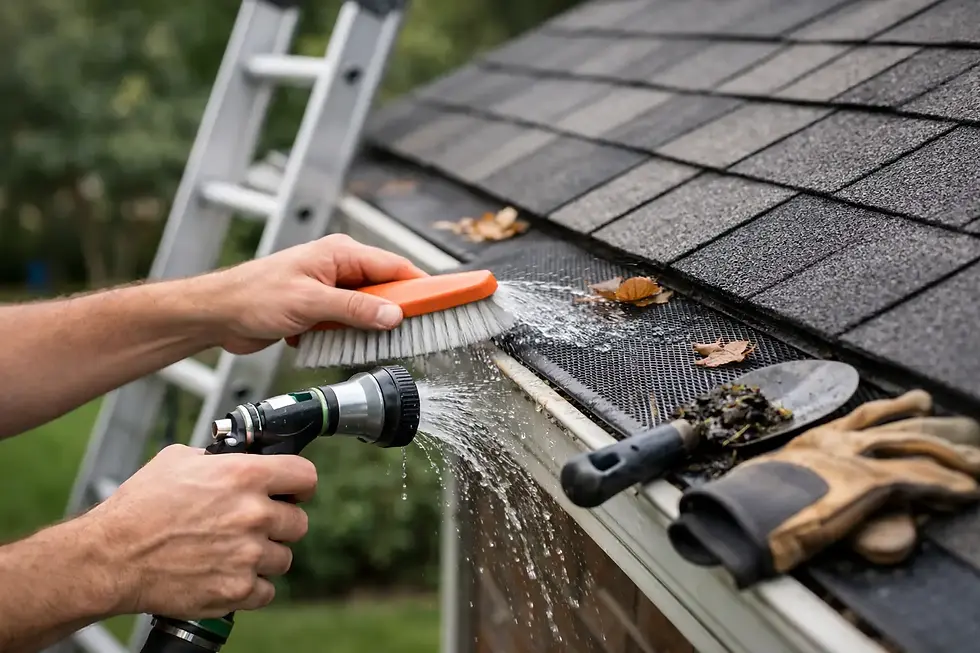
Micro-mesh systems use a very fine metal screen to block smaller debris, including many pine needles and roof granules. For homes surrounded by mature trees, they are often one of the strongest options because they keep more material out of the gutter itself.
However, mesh quality and installation are critical. A poorly supported mesh can sag, lift, or collect wet debris along the roof edge. Fine mesh can also develop a surface layer of pollen, dust, or leaf fragments that needs to be brushed away. Homeowners should view micro-mesh as a major reduction in cleaning needs, not permission to ignore the gutter system for years.
Surface-Tension or Reverse-Curve Guards
These guards use a shaped cover that directs rainwater around an edge and into the gutter while leaves pass over the top. When designed and installed correctly, they can shed larger leaves effectively.
The concern is heavy rainfall. During a hard summer downpour, water can move too quickly to follow the curved surface, causing runoff to overshoot the gutter. Performance also depends on roof pitch, shingle edge, gutter size, and how clean the guard surface remains. They can be a good fit in the right application, but they require a careful on-site evaluation rather than a one-size-fits-all recommendation.
Foam and Brush Inserts
Foam inserts and gutter brushes are often sold as quick, low-cost solutions. They sit inside the gutter and keep some larger debris from settling in the trough.
For long-term protection, they are usually the least dependable choice. Debris can lodge on or within the material, and wet organic matter may break down inside the gutter. Foam can deteriorate over time, while brushes may be difficult to clean thoroughly. For a home where water management protects a finished basement, foundation, landscaping, or siding, an exterior-mounted guard system is generally the more reliable investment.
The Guard Is Only as Good as the Gutter Beneath It
Installing guards over damaged or poorly draining gutters solves very little. Before selecting a system, inspect the full water path from roof edge to discharge point. Gutters should be firmly fastened, correctly pitched, and free of standing water. Seams, end caps, and downspout connections should be sealed and secure.
Downspouts deserve equal attention. Even a clean gutter can overflow if the downspout is undersized, clogged, disconnected, or unable to move water away from the home. Underground drain lines can also become blocked by sediment, roots, or collapsed sections. A guard installation is a good time to correct these issues rather than covering them up.
This is especially relevant for older homes in Richmond and Petersburg, where gutter systems may have been added, patched, or altered over decades. A professional evaluation should identify whether the existing gutters are worth protecting or whether repairs, replacement, or improved drainage are needed first.
How to Choose the Right System for Your Property
Start with the debris your roof actually receives. Homes beneath tall pines need finer filtration than homes with a few broadleaf trees. Homes with little tree cover may benefit from a simpler, more open metal screen that handles water volume well.
Then consider the roof. Roof pitch, shingle condition, valley locations, and the distance between the roof edge and gutter can affect which systems fit safely. Guards should never be forced under aging shingles or installed in a way that changes the intended flow of water from the roof.
Finally, consider your maintenance goal. If you want to eliminate the most frequent cleanings but accept a professional inspection each year, several quality guard styles may work. If the property has dense tree cover and a history of blocked downspouts, prioritize a system that filters fine debris and pair it with scheduled maintenance. Guards reduce the workload, but annual service helps catch hidden buildup, storm damage, and drainage issues before they become expensive repairs.
Questions to Ask Before You Approve Installation
Ask what material the guard is made from, how it attaches to the gutter, and whether the installer will inspect the gutter condition first. You should also ask how the system performs with pine needles, heavy rain, and roof valleys, since those are common trouble spots in Virginia.
Get a clear answer about cleaning. A trustworthy contractor will explain what debris may remain on top of the guard, how it is removed, and how often the full system should be inspected. Be cautious with promises that gutters will never need attention again. Water protection is not a set-it-and-forget-it part of homeownership.
It is also reasonable to ask whether the installation affects your roof warranty and what happens if a section needs repair later. A quality installation should allow for practical access to gutters and downspouts without turning a future repair into a major project.
When Gutter Guards Make the Most Sense
Gutter guards are most valuable when a home has recurring debris, difficult roof access, or homeowners who want to reduce hazardous ladder work. They can be particularly helpful for busy families, rental property owners, and anyone whose home is surrounded by trees.
They may not be the first priority when gutters are severely damaged, drainage is poor, or water already pools near the foundation. In those situations, repair and drainage correction should come first. Protecting a failing gutter system does not protect the home.
Virginia Gutters approaches guard installation as part of the larger drainage system, not as a stand-alone product sale. The goal is to keep rainwater moving safely away from the roofline, siding, foundation, and landscaping through every season.
A well-chosen gutter guard is preventive maintenance, not a magic cover. Have your roofline, gutters, downspouts, and drainage inspected before the next major leaf drop or storm season, then choose a system based on the conditions around your home.


Comments